

Welcome Readers!
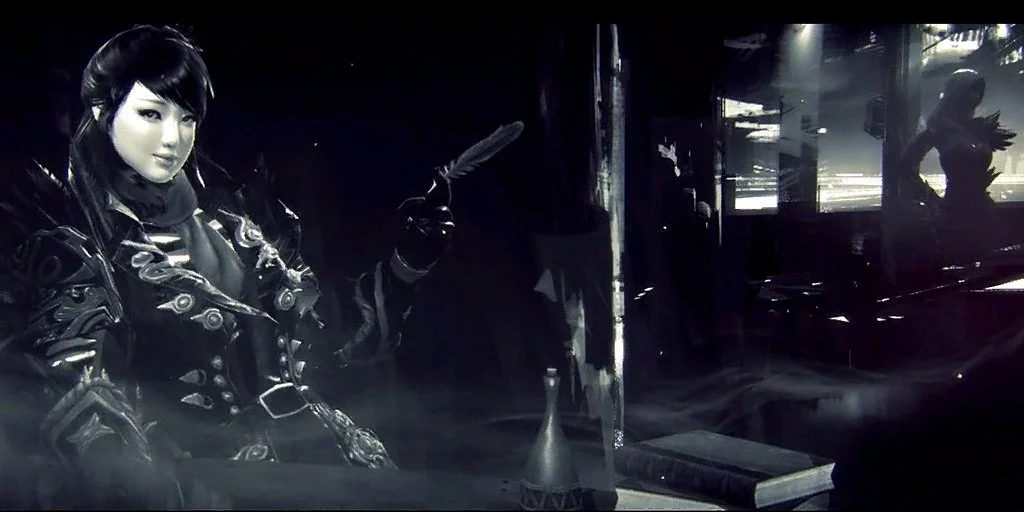
This month we’re diving into detective fiction. From Edgar Allan Poe's proto-detective novel The Murders in the Rue Morgue (1841) to the emergence of police procedurals (-1950) by way of Agatha Christie’s Golden Age (-1920), detective fiction has a rich history that continues to evolve in the contemporary era. Of course, the famous Tyrian detective Marjory Delaqua will be our point of reference for these recommendations.
Marjory Delaqua
Marjory Delaqua’s early life was characterized by a succession of unfortunate events that shaped her sense of justice and desire to protect those around her. Following in the footsteps of her older sister Belinda, she wanted to join an organization where she thought she could make a difference. While Belinda joined the Seraph, Marjory found an affinity with the Ministry Guard. However, she quickly witnessed the rot and corruption that permeated her fellow guards. After leaving the Ministry Guard, she spent some time in the Durmand Priory, but lost interest in the goals of the order.
“It's a long story, but back when Marjory was a Ministry Guard, she saw a boy get killed. His ghost spoke to her and asked her to take his weapons into her custody. They held some significance for him.” - Kasmeer Meade
Marjory soon realized the only way to truly make a difference was to set-up her own agency: Delaqua Investigates. She employed the newly-disposed Kasmeer Meade as an aid and with the assistance of her mysterious benefactor “E”, they soon set-out to find clients and solve cases around Tyria. Their first stop: Southsun Cove.
“Listen closely. There are forces at work in this city, in this world, that will take us all down if we let them. Together, you and I can make a difference.”
— E
Kasmeer and Marjory would meet the Pact Commander and assist them through various ordeals: the Karka attacks in Southsun Cove, the assassination of Captain Theo Ashford, the mysterious Tower of Nightmare and many more adventures. As the years passed, Kasmeer and Marjory’s relationship would only grow as they traveled to all corners of Tyria and offered their assistance where they could. However, Marjory Delaqua has one case that has haunted her for her entire career—the reason why she left the Ministry Guard. Maybe one day the story will focus on this case and we will be able to assist our friend in resolving it.
“I've hit dead ends with every clue I turn up. Mendel, I'm sorry. I won't give up. I promise. Not ever. Don't cry, kid.” - Marjory Delaqua
Marjory Delaqua’s character taps into several conventions of the detective genre and plays with their boundaries. At first glance, Marjory Delaqua is the typical hardboiled detective with an unresolved case haunted her past. At the same time, she always investigates with the help of an assistant which is a convention closer to the Sherlock Holmes era. Marjory’s assistant—Kasmeer Meade—is more than a “Watson” however, she also embodies elements of the femme fatale with her charm and mesmeric powers. Her teasing of Marjory goes beyond simple camaraderie and pushes into the lewd topics on occasions. Their relationship flips the script on the common detective duo trope by having them fall in love throughout the story which is quite rare in detective fiction. Today’s recommendation come from a similar background: authors who have molded and played with the medium by bending the rules and pushing the boundaries of what the genre means.
Tommy and Tuppence by Agatha Christie
Tommy and Tuppence is a series of novels and short stories written by Agatha Christie between 1922 and 1973. Through this series, the reader experiences Christie’s growth as a writer and the evolution of detective fiction as a genre. While Christie’s famous detectives Hercule Poirot and Miss Marple exemplify the rules of the Golden Age of detective fiction, Tommy and Tuppence is a series where she plays with the norms.
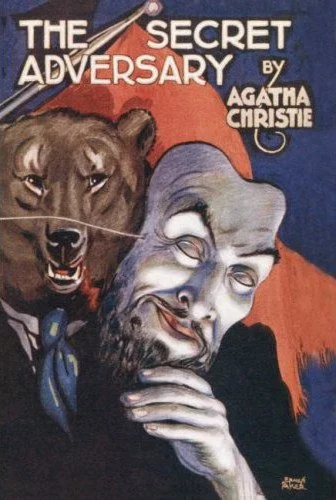
“Two young adventurers for hire. Willing to do anything, go anywhere. Pay must be good. No reasonable offer refused.” The Secret Adversary, Agatha Christie
The Secret Adversary begins after the end of World War 1 as Tommy and Tuppence—life-long friends—meet up once more and start to develop feelings for each other. At the same time, the two of them are looking for a way to make some money in this post-war society. They start their own agency ‘The Young Adventurers’ and are soon recruited by a British intelligence agent to recover some top secret documents.
Unlike other novels of the Golden Age, Tommy and Tuppence are a pair of detectives that have an equal standing in the story. One is not the sidekick or “Watson” to the other. This venture is a joint effort where each other’s skills and affinities complement the other and helps them achieve their goal.
As the novels progress, so do the characters. When the first novel is release in 1922, the titular characters are in their 20s and by the last novel in 1973, they are now in their 70s. With each new story, Tommy and Tuppence grow older and more experienced in their endeavours reflecting Christie’s own evolution as a writer.
If the stiff rules of the Golden Age do not interest you, I hope Christie’s experimentations with the genre in these novels and short stories pique your interest.
Magpie Murders by Anthony Horowitz
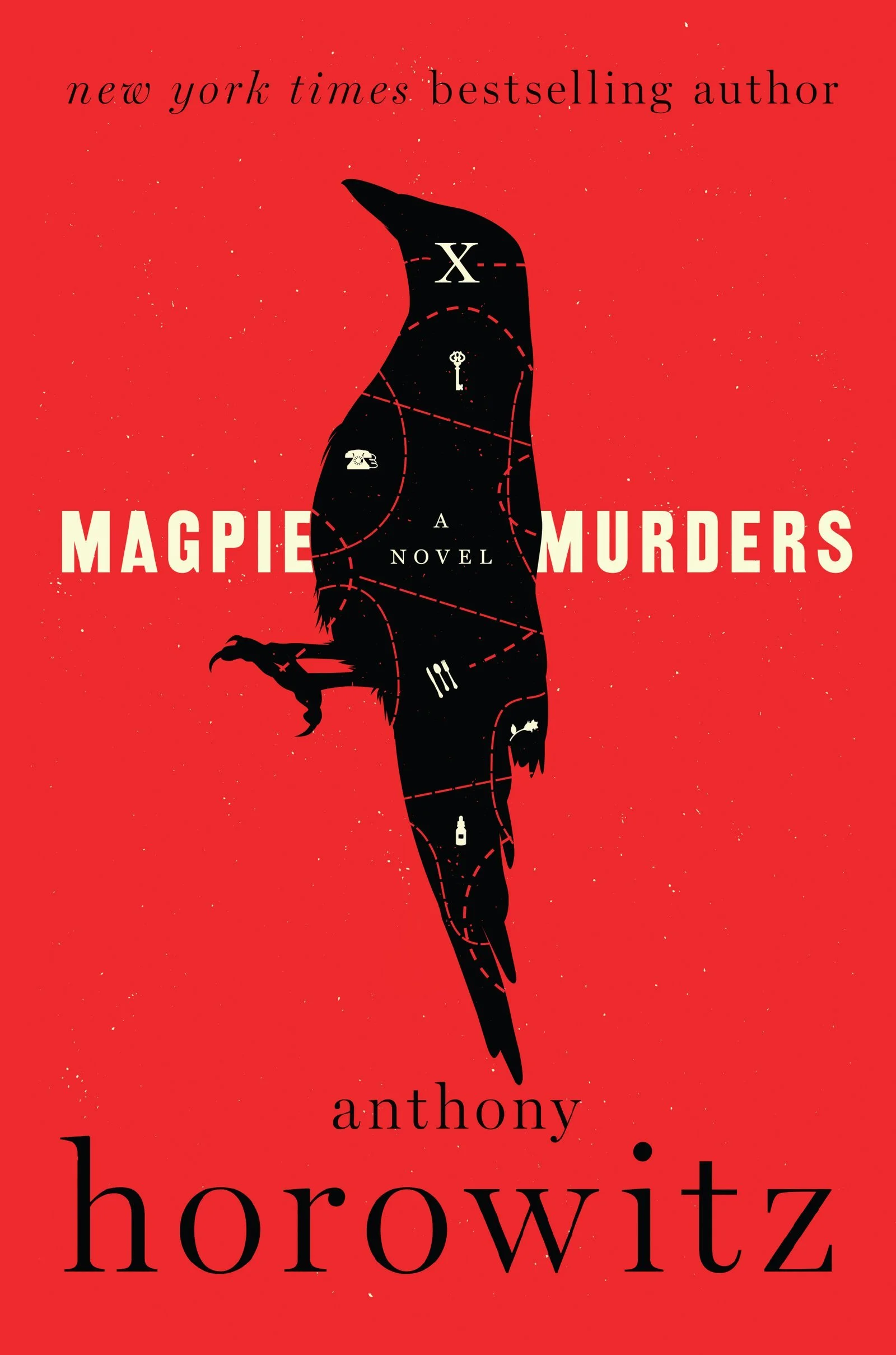
Horowitz’s 2016 novel Magpie Murders is a fascinating take on the detective genre. The reader is pulled into a two-fold embedded narrative. At first, the reader follows the adventures of Atticus Pünd, a detective trying to solve a series of murders in Saxby-on-Avon with the aid of his trusty assistant James Fraser. Then the reader is suddenly pulled out of the Atticus story to follow Susan Ryeland—editor of Magpie Murders—as she attempts to uncover the truth surrounding the death of Alan Conway—author of the Atticus Pünd series of books.
“Whodunnits are all about truth: nothing more, nothing less. In a world full of uncertainties, is it not inherently satisfying to come to the last page with every i dotted and every t crossed? The stories mimic our experience in the world. We are surrounded by tensions and ambiguities, which we spend half our life trying to resolve, and we’ll probably be on our own deathbed when we reach that moment when everything makes sense. Just about every whodunnit provides that pleasure.” Magpie Murders, Anthony Horowitz
Through this narrative, the reader experiences a clash between the Golden Age rules and the more modern detective thriller genre. As the narrative unfold, Horowitz uses this clash of style to comment, analyze, and dissect the genre for his audience.
Magpie Murders and its sequel Moonflower Murders need to be experienced first-hand to truly appreciate the passion and love that Horowitz has for this genre. If you’re an avid reader of detective fiction or just dipping your toe into the genre, this series has something for everyone to enjoy.
Although detective fiction is a fairly new genre in the history of literature, it has changed and evolved at an incredible pace. In just over a century and a half, the genre has molded itself to new social and scientific realities and continued to evolve. Authors have approached the genre for various social, scientific, pseudo-scientific, and political reasons from all sides of the spectrum, but the core remains: asking questions and attempting to explain the human psyche when acts of great violence are committed.
Thank you for reading our latest recommendations.
If you want to read these books, make sure to get them from your local bookstore or library.
We post new book recommendations every other month.
If you want to keep up with our updates, make sure to follow us on Blusky or subscribe to our newsletter below.
Keep an eye out for our next post in September!